Guest
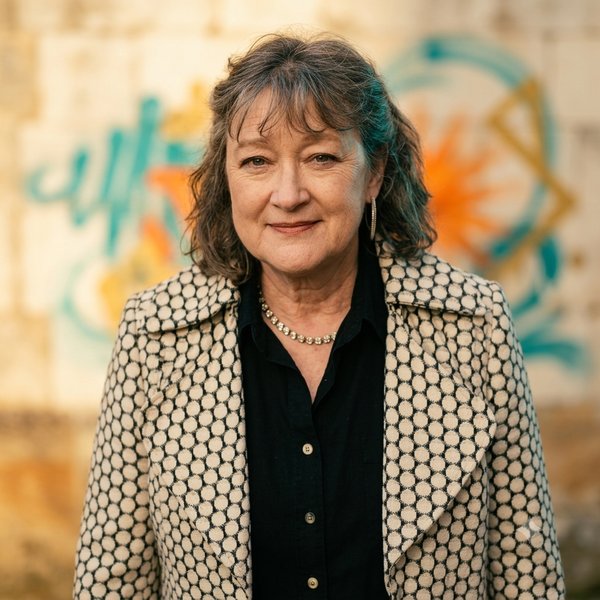
Dr Gale Pettifer
Clerk & Proper Officer
Brockenhurst Parish Council
Clerk & Proper Officer
Brockenhurst Parish Council
Most clerks deal with planning applications, precepts, and the occasional difficult councillor. Gale Pettifer deals with all of that — plus donkeys cracking open wheelie bins, cars floating down the village high street, and a 75-year-old content creator staging a sit-in on a footbridge that made national news. Life in the New Forest National Park is like no other posting in the sector, and Gale — Clerk & Proper Officer at Brockenhurst Parish Council, a practicing commoner, and a "girl from Kent who always dreamed of ponies" — tells it like it is.
Brockenhurst is the largest parish council in the New Forest: around 3,500 residents that can double in summer with tourists, a precept of £107.82, a median resident age of 51, and a cross-rail link from London Waterloo to Manchester Piccadilly that brings both day-trippers and the occasional car onto the railway tracks by mistake. The parish sits inside the New Forest National Park — designated in 2005, shaped by commoners' livestock since William the Conqueror in 1079 — which means almost nothing is straightforward. Gas mains? Dug by hand because the route crossed SSSI-designated land. A new bus shelter? First, find land to swap with the verderers so the grazing footprint stays the same. A crumbling footbridge? Negotiate with Forestry England while Natural England checks the environmental impact on the surrounding SSSI. A water splash on the main road? Cars float in a surprisingly small depth of water, and the council is working with the Environment Agency, Hampshire County Council, and Forestry Commission on a flood resilience plan.
The governing landscape around a New Forest council is unlike anything a standard Proper Practices guide covers: the New Forest National Park Authority handles planning; the Verderers — a statutory body dating back centuries — protect commoners' rights over the unenclosed forest; Forestry England acts for DEFRA as landowner; Natural England holds the conservation designations; the Environment Agency, New Forest District Council, and Hampshire County Council all have roles. Layer in Brockenhurst College, the Village Hall Trust, Friends of Brockenhurst, and Speed Watch, and a typical clerk's week involves more stakeholders than most.
The animals are both the draw and the daily operational challenge. The ponies, cattle, donkeys, and pigs are semi-feral — not wild, not pets, free to roam anywhere across the unenclosed forest, with full right of way over traffic. They fertilise the heathland, keep the landscape open, and maintain biodiversity that earned the New Forest its designation. They also work out how to open wheelie bins (the district council's new food caddies lasted approximately one week before the donkeys cracked them), alert the parish office when they're lying down for a proper sleep (panicking visitors who think they've found a dead foal), and get encouraged into local shops by Brockenhurst College students roughly once a year — always a slow news week, always national coverage.
Gale herself is a practicing commoner — she bought a property with rights of common, established her entitlement at the Verderers' Court, found a mentor among established commoners, and now has her own ponies roaming the forest. On weekend evenings she goes out to find them, identifies them by their markings and the way they walk, and checks on them the way a farmer checks on livestock — except hers are somewhere across 220 square miles of open heathland. "I think I went through the wardrobe and came out in Narnia," she says. She grew up on a council estate in Kent, cried herself to sleep as a child for want of a pony, worked at the Palace Theatre on Shaftesbury Avenue at 18, and eventually found her way to the New Forest and a life she pinches herself over every day.
The advice she'd give her 18-year-old self: learn about money. Not an accounting course — just the really boring stuff. Pensions. Savings. Starting early.
Drawn from our conversation with Dr Gale Pettifer, Clerk & Proper Officer at Brockenhurst Parish Council. The answers below are editorial summaries of points raised in the session — not verbatim transcripts.
Commoning means holding rights to graze animals — ponies, cattle, donkeys, mules — on the unenclosed Crown lands of the New Forest. The rights are attached to property, not to a person, so the only way to become a commoner is to buy or inherit a property that already carries those rights. Once established, the commoner takes their title deeds to the Verderers' Court, a search is carried out, and the rights are confirmed. Many families who have commoned for generations can no longer afford to buy properties with common rights, as rising house prices have put them beyond reach — a significant concern for the long-term future of commoning.
The Verderers are a statutory body whose primary purpose is to protect the interests of commoners and their animals on the unenclosed forest. Their court meets monthly (except August), with a public session open to anyone who wants to raise a presentment — a formal issue for the court to consider. The clerk attends regularly and has made presentments on behalf of the parish council. Practically, the Verderers' consent is needed for anything that affects the grazing land: a new bus shelter, for example, requires a land swap to give back to the Verderers an equivalent area of grazing elsewhere in the parish.
The ponies, cattle, and donkeys that roam the New Forest are owned by commoners and are accustomed to some human contact. They cannot be petted or ridden, but they can be handled by their owners when sick or injured without causing extreme stress. The balance is deliberate: too tame, and they become a danger by approaching strangers; too wild, and welfare interventions become impossible. Stallions are only present during a specific breeding season; all other male animals are excluded from the open forest.
Sites of Special Scientific Interest designation means that even routine infrastructure work can require detailed environmental assessment and dramatically different methods. When gas mains were replaced in Brockenhurst, the route ran through SSSI-designated land and contractors were not permitted to use mechanical excavation equipment — they had to dig the entire trench by hand. Any improvement to the historic footbridge over the Ober Water similarly requires survey work from Natural England before a single plank can be changed.
A footbridge in Brockenhurst had been in dispute for years over ownership — the parish council had assumed it belonged to Hampshire County Council Rights of Way, but it turned out to belong to Forestry England. Forestry England's survey found it non-compliant with current safety standards (single handrail, too narrow for a pram or wheelchair), and ruled that bringing it up to standard would cost more than removal. When contractors arrived to take it down, a 75-year-old content creator had staged a sit-in on the bridge, which went national. The parish council is now negotiating a lease from Forestry England to take on the bridge and is working with local people to make it safer, though it will remain single-pedestrian width.
The New Forest sits in the Hampshire Basin, surrounded by wetland and streams, and certain village roads — including the famous 'water splash' on Brookley Road — flood regularly in winter. Cars can float in surprisingly shallow water, well below wheel-arch depth, and the visually benign appearance of a few inches of water is deceptive. The council, along with the Environment Agency, Forestry Commission, and Hampshire County Council, is developing a flood resilience plan to mitigate the worst flooding and prevent drivers from attempting to cross when water levels are dangerous.
When New Forest District Council introduced wheelie bins, the donkeys quickly worked out how to open the food caddies — raising concern that if they accessed certain waste during panage season (when pigs are released to eat acorns), there was a risk of foot-and-mouth disease. Residents inside the National Park can now keep food caddies within their gates. Public litter bins also present a challenge: when they overflow — particularly during the college lunch period — donkeys empty them and scatter the contents. Parish councillors and the clerk regularly don plastic gloves to clear up.
Panage is the ancient practice of releasing pigs onto the New Forest in autumn to eat the acorns, which are toxic to horses and cattle if consumed in large quantities. The pigs clear the acorns naturally, protecting the other animals. It runs for a set period each year and is one of the oldest recorded rights of common in the forest.
Brockenhurst's resident population of around 3,500 can effectively double in summer with tourists — attracted by the animals, the landscape, and the rail connections from London and Manchester. That brings pressure on bins, the village centre, and council services. The college also adds a resident student population. Managing a community whose demands fluctuate so sharply between seasons is a significant part of the clerk's planning.
Rising property prices have made it increasingly difficult for local families — including multi-generational commoning families — to afford homes inside the National Park. As properties with common rights are bought by incomers who don't exercise those rights, the active commoning community shrinks. The Verderers, the Commoners' Defence Association, and the National Park Authority are working on a 'commoners' dwelling scheme' — building homes specifically accessible to younger people who want to continue the commoning tradition, recognising that it is the grazing of the animals that maintains the unique New Forest landscape.