
Guest
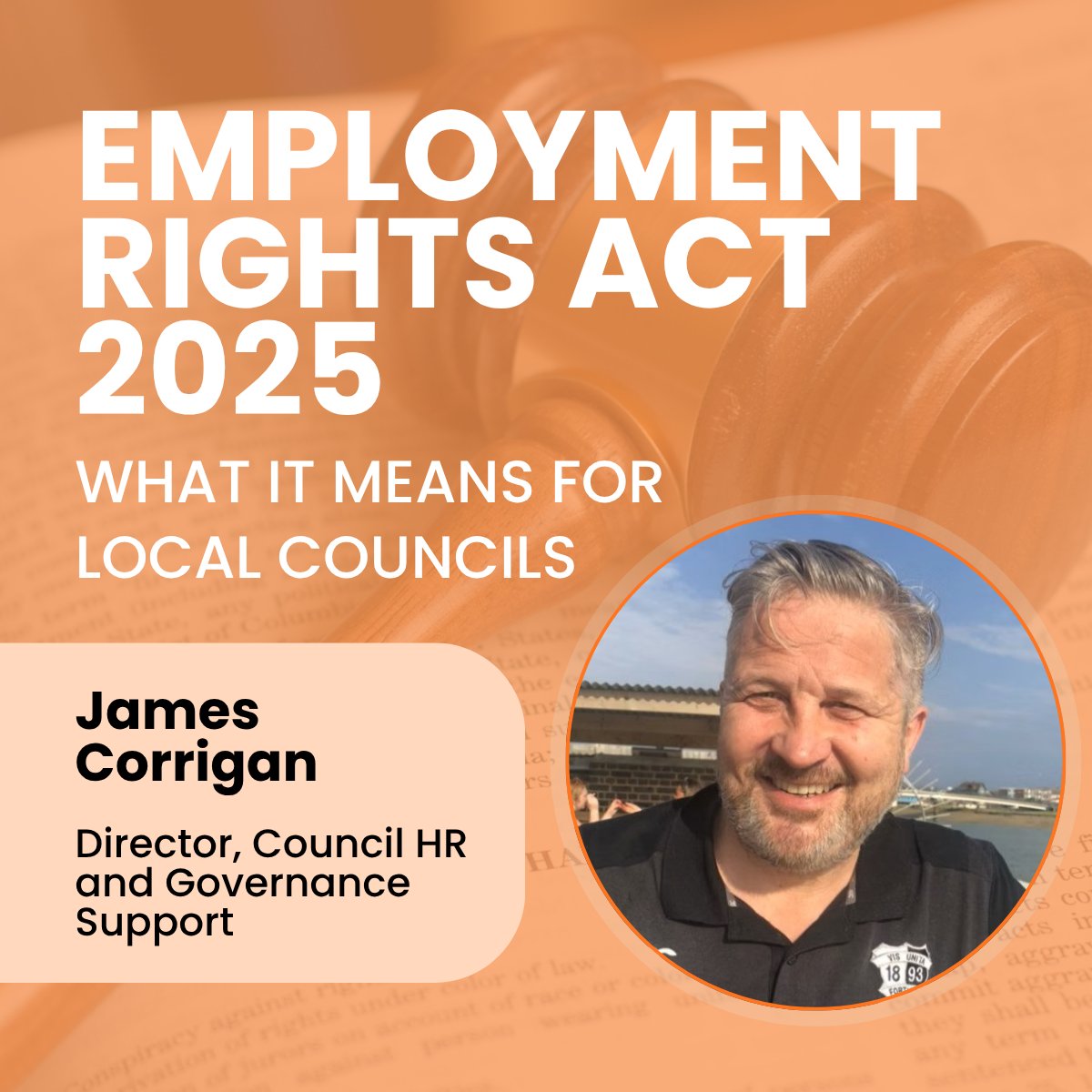
James Corrigan
Director
Council HR and Governance Support
Director
Council HR and Governance Support
Employment law is facing its biggest shake-up in a generation, and for lean council teams a single tribunal claim can be financially and operationally devastating. In this episode, HR and governance specialist James Corrigan joins John to unpack what the Employment Rights Act 2025 actually means for parish, town and community councils — and, crucially, what to do about it.
James has spent more than two decades advising local authorities on HR and ACAS compliance, after a career that took him from court clerk to town-council chief executive — via three degrees earned while working, a spell as a competitive rugby player, and a former life on the trumpet. He explains how the Act is arriving in stages, why the qualifying period for unfair dismissal is dropping to six months, how the shift to taking “all reasonable steps” raises the bar on preventing harassment (including harassment of staff by councillors), and why AI tools are driving a surge in low-cost tribunal claims.
Along the way he shares the practical playbook: cap probations at three months, get onboarding and one-to-ones right, check your policies before you act, and — his nan's advice, and the theme of the episode — remember that a stitch in time saves nine. Deal with problems early, and document everything.
Topics covered include the phased rollout of the Act; day-one and six-month rights; statutory sick pay and menopause guidance; the preventative duty on sexual harassment and third-party harassment; unlimited damages and the risk of high-value claims; AI-generated claims; and the immediate actions every clerk and RFO should take.
Drawn from our conversation with James Corrigan, Director at Council HR and Governance Support, and the questions raised during the live session. The answers below are editorial summaries — not verbatim transcripts.
Royal Assent was granted on 18 December 2025, but the Act arrives in stages through regulations rolling out over the next two to three years rather than in one go. Some measures are already in force; others land through 2026 and 2027. Much of the union-focused content has limited impact on parish and town councils, but several employment changes apply directly.
The long-standing two-year qualifying period is being compressed to around six months, effective from 1 January. In practice it already bites, because someone hired now will pass six months' service by that date. Councils can no longer sit on concerns about a new starter for a year or more before acting.
Cap probation at three months, with the option to extend by a further month. Six-month probations are now a trap, because an employee reaching the end of one would qualify for unfair dismissal protection at the same moment. Shorter probations force managers to assess suitability and act decisively.
Discrimination and protected-characteristic claims have always been uncapped, and that exposure is expanding toward standard unfair dismissal. A poorly handled dismissal of an older, well-paid employee can generate a claim covering years of lost salary and pension differential, potentially reaching six or seven figures. One recent tribunal awarded a disabled worker 4.7 million pounds.
Yes. Online tools can generate a letter before action for around ten pounds or a full tribunal claim for around twenty, which has sharply increased the volume of claims. Despite headlines about AI winning a tribunal, the case in question was argued and won by a human HR barrister; the AI only produced the paperwork. The practical effect is more claims landing on clerks' desks, so any unusually polished correspondence should prompt immediate HR advice.
From October the standard rises from taking reasonable steps to taking all reasonable steps to prevent sexual harassment, with further guidance expected in January. Having a policy is no longer enough; a council must be able to show the active, proactive measures it has taken. James expects more claims in this area across the sector.
Yes. Employers must take reasonable steps to protect employees from harassment by third parties, including councillors, contractors and members of the public, where it relates to a protected characteristic. Pointing to the monitoring officer or standards process is not a defence at tribunal, and the employer's duty of care under health-and-safety law runs alongside it. Reasonable steps can include restricting a councillor's contact with the officer, removing them from committees, or pursuing defamation or harassment remedies.
Yes. Even a council with one clerk should ensure its insurance covers legal claims from employees, including claims involving councillors. Cover will not necessarily pay out in full, but it softens the blow, and there are cases where a council found itself uninsured for exactly this kind of dispute.
Yes. Employers must now notify employees of their right to join a union as part of onboarding, similar to how pension auto-enrolment is communicated. It is a neutral notification, not a recommendation either way. Unions are less prominent in the parish and town sector than in principal authorities, but they do appear in disciplinary and grievance matters.
Reduce probations to three months, build a thorough induction with regular documented one-to-ones, act quickly when performance issues arise, and review policies so they reflect the changes and stay ACAS-compliant. Above all, document everything: confirm performance conversations by email so there is a time-stamped, contemporaneous record if a matter ever reaches tribunal.