
Inside the New Digital AGAR (and a Pool Party Before the Podcast)
Meet the guests

Watch
Get the Video and Slides
Show notes
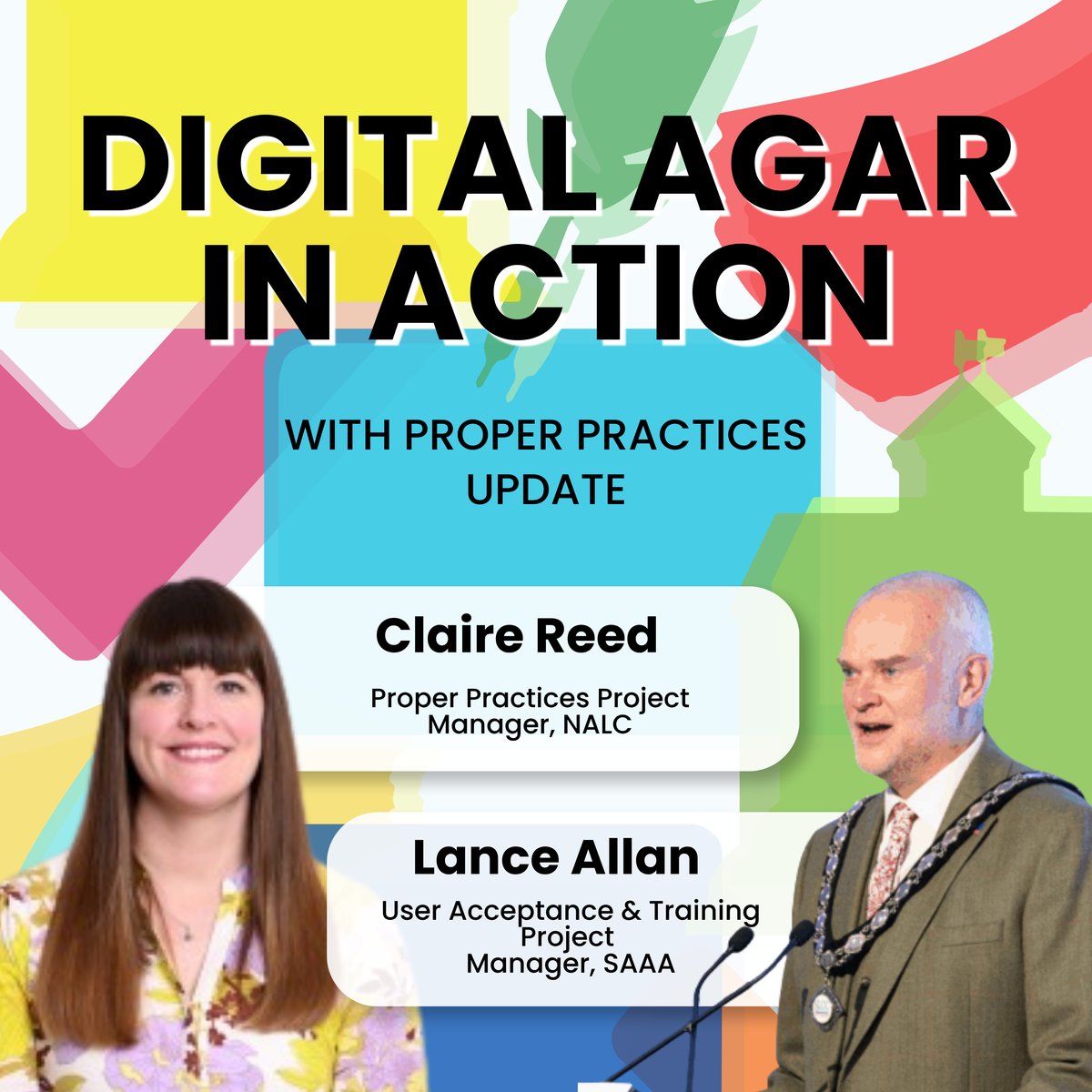
The Annual Governance & Accountability Return is moving online. In this episode Lance Allan, User Acceptance & Training Project Manager at SAAA (Smaller Authorities' Audit Appointments), talks John through the new digital AGAR portal — trialled with 78 real submissions this year and available to every authority from spring for the 26/27 return. Claire Reed, Proper Practices Project Manager at NALC, then sets out the CIPFA rewrite of the Proper Practices and what it means for your accounts and governance from 27/28.
Lance's section is the practical one. The portal won't be compulsory next year, but there's a cash incentive for using it. Your login is the email address your external auditor already holds — so tell people if it changes. The system opens in the autumn so you can have a practice run, and the 25/26 comparative figures you enter then are saved for you. He also explains why you'll want to do the accounting statements before the meeting and take a blank annual governance statement to it, and how the system produces a redacted, accessible copy of the signed AGAR for your website with the signatures stripped out.
The most useful few minutes are about variances. You need an explanation once you're over 15%, and over £100,000 for larger councils — and, crucially, you do not need to explain every last pound. Lance is explicit that external auditors now know not to ask for that: an explanation covering £100,000 of a £100,828 variance is more than satisfactory. But he's equally clear about the other end of it — if you're sitting at 15.5%, don't scrabble around for a few pounds just to drop under the threshold. Explain the majority of it.
Claire's half covers the rewrite. The guide has been shortened, de-jargoned and given a glossary; guidance is now signposted by authority type, with a separate appendix for parish meetings; and roles and responsibilities for clerks, RFOs, members and auditors are spelled out. Assertion 6 becomes "governance", bringing a new requirement that internal and external audit reports are reviewed in an open public meeting, published on the website, and backed by a monitored action plan. There's a new CIPFA code of practice for internal audit in Category 2 authorities — aimed squarely at the arrangement where someone local glances over the accounts for a bottle of wine or an M&S voucher. On the accounts themselves: borrowing is separated out, staff costs stop being a separate line (a privacy fix for one-employee councils), debtors and creditors move onto the form itself, and reserves are split between earmarked and general so residents can see why a council is holding money.
Also in this one: Claire on going from sixteen years as a primary school teacher to local government (and knocking herself out demonstrating how to catch a ball), Lance on cycling 800 miles in nine days for the 800th anniversary of Magna Carta, and whether software providers will be able to feed figures straight into the portal.
A consultation on the full Proper Practices runs in August and September, with the new guidance published in early 2027 and applying to the 27/28 financial year. Useful links: SAAA and NALC.
Chapters
Questions answered in this episode
Drawn from our conversation with Claire Reed, Proper Practices Project Manager at NALC, and Lance Allan, User Acceptance & Training Project Manager at SAAA, and the questions raised during the live session. The answers below are editorial summaries — not verbatim transcripts.
What is the digital AGAR, when can I use it, and is it compulsory?
It is a new online portal for submitting the Annual Governance and Accountability Return, built by SAAA. It was trialled during 2025/26 and received 78 submissions from participating authorities, and becomes available to every smaller authority in spring for the 26/27 return at agar.saaa.co.uk. It is not compulsory next year, but there is a financial incentive — described as a cashback or incentive payment — for authorities that submit through it.
How do I log in, and can I practise before the real submission?
The login is the email address registered with your external auditor for your most recent AGAR submission, so make sure people are told if the address you use for council business changes. There is a request access option on the login page if it is not recognised, plus a forgotten password link. The system is expected to open to everyone in the autumn for a practice run, and any 25/26 accounting statement figures entered then — needed as comparatives — are saved, so they will not have to be entered twice unless something needs restating.
When does a variance need an explanation?
An explanation is required once the variance exceeds 15 per cent, and for larger authorities once it exceeds £100,000. The system calculates the variance in both pounds and percentage terms and shows a yellow warning box where an explanation is needed, turning green once enough has been provided. You cannot move past the question while the warning stands.
Do I have to explain every single pound — and can I just get under 15 per cent?
No to the first, and not quite to the second. Explaining £100,000 of a £100,828 variance is more than satisfactory, and external auditors now understand they should not ask authorities to account for every pound. But where a variance sits at around 15.5 per cent, a token explanation purely to bring it under the line falls short of what is expected — the majority should still be explained. Reaching the green box is not by itself the standard being aimed at.
What order should I complete the AGAR in, and who signs what?
The accounting statements should be completed and signed by the RFO before the meeting at which they are approved. The annual governance statement is better handled by taking a blank form to the meeting for members to determine each answer, then entering it afterwards and arranging for the person who chaired that meeting to sign it. No second meeting is needed to approve it. A planned enhancement will let authorities complete the two sections in either order.
The trust funds question has changed wording — what do I answer now?
The question currently asks whether the figures in the accounting statements exclude any trust transactions, so an authority that is not a trustee answers yes. Following a change in the practitioner's guide it will ask whether they include trust transactions, meaning a non-trustee will answer no. The guidance notes alongside the question state which answer applies.
Does the system produce a version of the AGAR for our website?
Yes, and it is worth downloading. After submission the portal generates an accessible copy showing the approval date and minute reference but with the signatures redacted, which avoids the security concerns around publishing scanned signatures. The public rights notice is expected to be generated by the system in future, once an announcement date is entered.
What's changing on the accounts, and will we have to restate our figures?
The accounting statements are renamed the statement of accounts to match the legislation. Borrowing is separated out rather than sitting in other receipts, staff costs stop being a separate line and fall within total other payments, debtors and creditors move onto the form itself for authorities on an income and expenditure basis, and reserves are split between earmarked and general. Because figures are reported differently, most authorities will need to restate their comparatives in the first year — for completion in 2028 — after which the format stays consistent.
Why are staff costs no longer reported separately?
Feedback from very small authorities pointed out that where there is only one member of staff, publishing staff costs as a distinct line effectively discloses that person's pay. The figures still form part of total payments, and payment details are published monthly or quarterly in the usual way, so the information remains findable for anyone who looks — it is simply no longer displayed on the front of the return.
What is changing in the annual governance statement for 27/28?
Most assertions keep their wording, but the order changes so that accounts-related assertions sit together in a more logical flow. Assertion 6 is renamed governance and brings new requirements: internal and external audit reports must be reviewed in an open public meeting and published on the website, any matters raised need an action plan that is also discussed publicly and published, and there must be evidence that the plan is monitored and progress reported — a minute recording the review is enough.
Is there now a code of practice for internal audit at smaller authorities?
Yes. Although law requires a code of practice for internal audit, none specifically relevant to Category 2 authorities existed until this review, so CIPFA has written one with input from the Internal Audit Forum. Authorities using an internal auditor who is independent of the council and experienced in auditing both governance and accounts should have nothing to worry about. It is aimed at arrangements where someone local is paid in a bottle of wine or a voucher to glance over the accounts, which is no longer acceptable for bodies handling public funds.
When do the new Proper Practices take effect?
A consultation on the full Proper Practices runs in August and September, open to members, clerks, RFOs and auditors. The new Proper Practices and supporting guide are due in early 2027 and apply to the 27/28 financial year, which means the changes first appear on the AGAR completed around April and May 2028. Going forward there will be two documents: the mandatory Proper Practices, and a guide supporting completion.
Will accounting software be able to submit figures into the portal directly?
Eventually, but there is no timescale yet. The priority is de-risking the launch, which is why there is initially one login email per authority. Planned enhancements include electronic signatures for the chair and a route for internal auditors to complete their own section, with software integration expected at a later stage.