
The Journey of a Locum Clerk
Meet the guest
Watch
Get the Video and Slides
Show notes
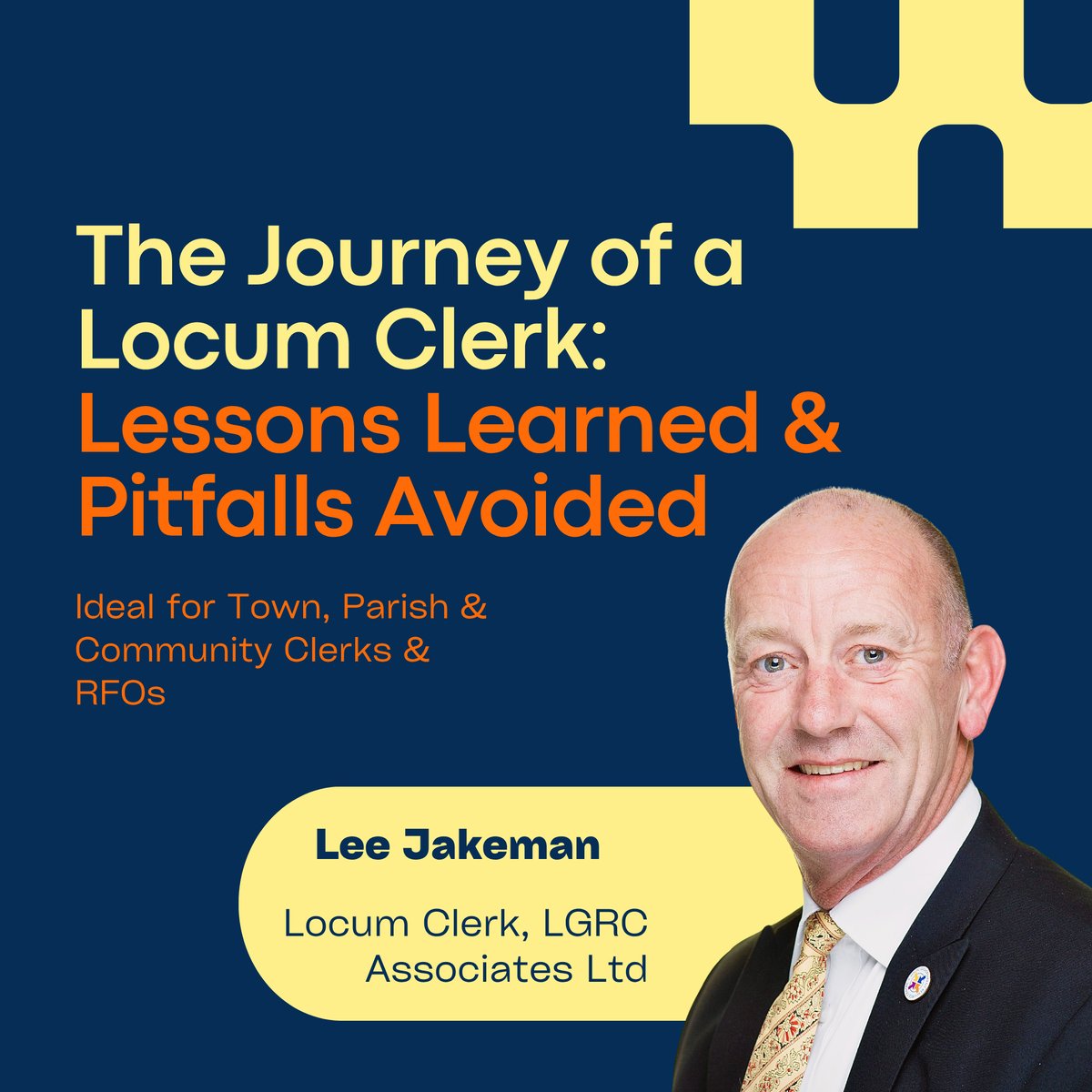
Lee Jakeman joined the RAF at 16, ran the administrative side of a military base, and worked contingency planning on 9/11 before deciding a parish council job advert looked “a bit like running a military base”. Fifteen years as a town clerk followed — Newport, Bridgnorth and Kidderminster — until he decided he no longer wanted to work “9 till 9, six days a week” and went locum. He's now a partner at LGRC Associates.
This isn't a policy briefing. It's an honest account of arriving somewhere cold, including the mistakes Lee made on the way, and it's as useful to permanent clerks as to anyone thinking about interim work.
What Lee covers:
- The first week — the trivial things that cause the biggest problems: where's the laptop password, who has the bank login, what's the code for the allotment padlock. Then the governance questions that can't wait: is the council quorate, is anyone approaching the six-month disqualification threshold, has the internal auditor been appointed. Lee once arrived to find 2 of 13 councillors in post, had to run a full set of elections, and couldn't do anything for three months — including get paid.
- The website as a health check — before he starts anywhere, Lee reads the latest minutes, the policies, last year's AGAR and the payments over £500. If they're all there, what sits beneath them is probably sound. If the AGAR is missing, he asks why. He also uses the live website rather than a crib sheet when quoting hall hire, because it's the fastest way to spot a policy that was changed and never published.
- Walking into the politics — councillors will tell you how poor the last clerk was, warn you about a difficult colleague, and share grievances years in the making. Listen professionally, take no sides. Then restore procedure: in almost every council Lee has joined, he's had to ask members to actually raise their hands for a vote, and to state the motion clearly enough to minute.
- FOI, kept simple — if someone asks for information you hold, provide it; don't worry about why they want it. FOI covers documents that exist, not opinions or reasoning. Acknowledge within five working days with a standard template, respond within 20. The best way to cut the burden is to publish the documents in the first place.
- Persistent correspondents — Lee calls a lot of it “intellectual sport”, and a quick reply is the reward they're after. His test: does the email actually contain a question? If it's a rant with no request, park it. Respond once, clearly, and don't be drawn into a debate. The skill is not letting a difficult minority crowd out the genuine majority.
- Documentation — “it's often the simple omission at the beginning that creates the crisis at the end.” A councillor verbally lets a community group use a piece of land. Nothing minuted, no terms, no insurance, no end date. Three years on a new clerk arrives, there's a structure on the land and no record of a decision.
- Money and trusted advice — read your standing orders and financial regulations properly, read the JPAG guidance cover to cover, use industry-standard accounts software rather than a bespoke spreadsheet. And not Facebook: you don't know who's answering or what their experience is. Ask your county association, the SLCC, or the software helpline.
- Sometimes you need to let things break — the counter-intuitive one. Clerks cut corners under pressure to keep the peace, which teaches councils that the rules don't really apply. Let poor practice surface; let the internal auditor say it out loud. Lee's analogy is the wedged-open fire door — rules exist for a reason.
- The legacy you're writing now — aimed squarely at permanent clerks. One day you'll leave. What will the next clerk find? Every file you save and process you document is a gift to your successor. Plus professional authority: don't let a council act because “the clerk said so” — name your source, whether that's Arnold-Baker, the JPAG guidance or the legislation itself.
- Writing reports that protect everyone — Lee's five-part structure (aim, background and legislative basis, discussion, summary, options and recommendation), always at least two options including doing nothing, and language that keeps you advisory: “my initial thoughts are…” rather than committing on the spot.
John also puts the audience's questions to Lee: why do a job this challenging (“if you don't get up in the morning for a challenge, you might as well stay in bed”), how to land a first clerk role and what red flags to watch for at interview, and what locum work actually pays.
Lee's line on experience is worth the price of admission on its own: “somebody who's got 20 years of experience might have 20 years of the same yearly experience.”
Interested in locum or consultancy work through LGRC? Email info@lgrc.org.uk or express an interest via lgrc.uk.
Chapters
Questions answered in this episode
Drawn from our conversation with Lee Jakeman, Partner at LGRC Associates, and the questions raised during the live session. The answers below are editorial summaries — not verbatim transcripts.
What should a locum clerk do in their first week at a new council?
Start with the practical things that stop you working at all: the laptop password, the bank login details, the code for the allotment padlock. Then move straight to the governance questions that can't wait — is the council quorate, is any councillor approaching the six-month disqualification threshold, has the internal auditor been appointed, and if you're arriving late in the year, has the annual risk assessment been done. These sound trivial until you arrive somewhere where nobody can answer them.
How can you tell whether a council is well run before you start?
Read its website. Look for the latest minutes, the policies, last year's AGAR and the list of payments over £500. If all of that is present and current, what sits beneath it is probably in reasonable order. If the AGAR is missing, ask why. It's a quick health check on how the council operates behind the public-facing pages, and it costs you nothing.
How should a clerk handle a Freedom of Information request?
Keep it simple. If someone asks for information you hold, provide it — don't spend time wondering why they want it. FOI covers documents that exist, not opinions, reasoning or what's in someone's head. Acknowledge within five working days using a standard template that repeats their request back to them and states you'll respond within 20 working days. The most effective way to reduce the burden is to publish the documents on your website so you can simply point requesters there.
What do you do about someone who constantly floods the council inbox?
Recognise what it often is — a form of intellectual sport, where a fast reply is the reward being sought. Answer immediately and the next email arrives that afternoon. A useful test is whether the message actually contains a genuine question; if it's a rant with no request in it, you're not obliged to respond, so park it and give yourself time to think. When you do reply, reply once and clearly, and don't be drawn into an extended debate. The real skill is not letting a difficult minority crowd out the genuine majority who simply care about their community.
Why does poor record-keeping cause problems years later?
Because it's usually the small omission at the beginning that creates the crisis at the end. A councillor verbally agrees that a local group can use a piece of land. Nothing is properly minuted, no terms are set, no insurance requirement is recorded and no end date is agreed. Three years later a new clerk arrives to find a structure built on the land, no record of any real decision and no terms to enforce. Good documentation isn't bureaucracy — it protects the council, the clerk and the community.
Where should clerks go for reliable professional advice?
Not Facebook groups. They're fine for light-hearted chat, but the questions are often unclear, the answers frequently miss the point, and you have no idea who is answering or what their experience is. Use your county association, the SLCC, or the helpline for the software you're asking about — they'll answer directly and quickly. And if you're unsure of something, say so and offer to check and confirm. That's a professional answer; bluffing isn't.
How should a clerk hand over passwords and system access when they leave?
Hand over to the council, not directly to the next person — the chair, or whoever the council appoints. Write the passwords down, seal them in envelopes and keep them in a safe to be opened in an emergency; most of them, like the electricity account, aren't really secrets anyway. Banking access is the exception and shouldn't be passed on at all: make sure enough councillors have access in their own right through the separation of powers, and leave it to them. And distinguish between handing over information and handing over the knowledge in your head, which needs an actual overlap period.
What should be agreed in a locum clerk's contract?
Get everything labelled in writing before you start, because loose arrangements over an hourly rate and a number of hours leave too much unresolved. Where is the place of work? Travelling to your normal place of work generally isn't work time, but if home is your place of work then mileage to council meetings should be claimable. Working through an organisation rather than as a sole trader means someone else drafts those terms and has thought about the questions in advance.
What can a clerk do when a chairman doesn't take a proper vote?
Interrupt, politely but plainly. Ask who actually voted, and point out that the standing orders say voting should be by a show of hands. It can feel like you're running the meeting, but a council in that state is usually looking for structure, and it's easier to set the expectation at your first meeting than your third or fourth. Giving that professional advice is part of the job.
How should a clerk advise a council without straying into deciding for it?
When a councillor asks what you would do, resist answering directly — that isn't your role. Present options instead, some more suitable than others, and make sure every option listed is one you'd be content for the council to choose. Doing nothing and maintaining the status quo is often legitimate, so include it and explain the consequences. Where you do have a preferred recommendation, say so clearly and give your reasons. In conversation, stay non-committal until you've had time to think: "my initial thoughts are…" or "that can be done, but I'd need more hours or external help."
What makes a good report to council?
A consistent structure, serial-numbered so it can be found again. The version used here has five parts: the aim, which becomes the agenda item; the background and legislative basis; the discussion, carrying the professional advice, risks and financial implications; a short summary; then options and a clear recommendation. It forces you to think before the meeting, gives councillors what they need to decide well, and creates a searchable archive that protects everyone when the questions come later.
Is there a standard hourly rate for locum clerk work?
No — it varies with what you're selling, your experience, and the council itself, though rates broadly track the size of the precept and the range of services. A small parish with grass cutting and a cemetery is a different proposition from a large town council running ports, harbours and dozens of buildings. Hours vary just as widely, from five hours a week to four days. The rate may look good, but there's no holiday or sick pay behind it — and you can't overcharge and expect repeat work.