
Forecasting, Budgeting & Setting the Precept (and Lashings of Ginger Beer)
Meet the guest
Watch
Get the Video and Slides
Show notes
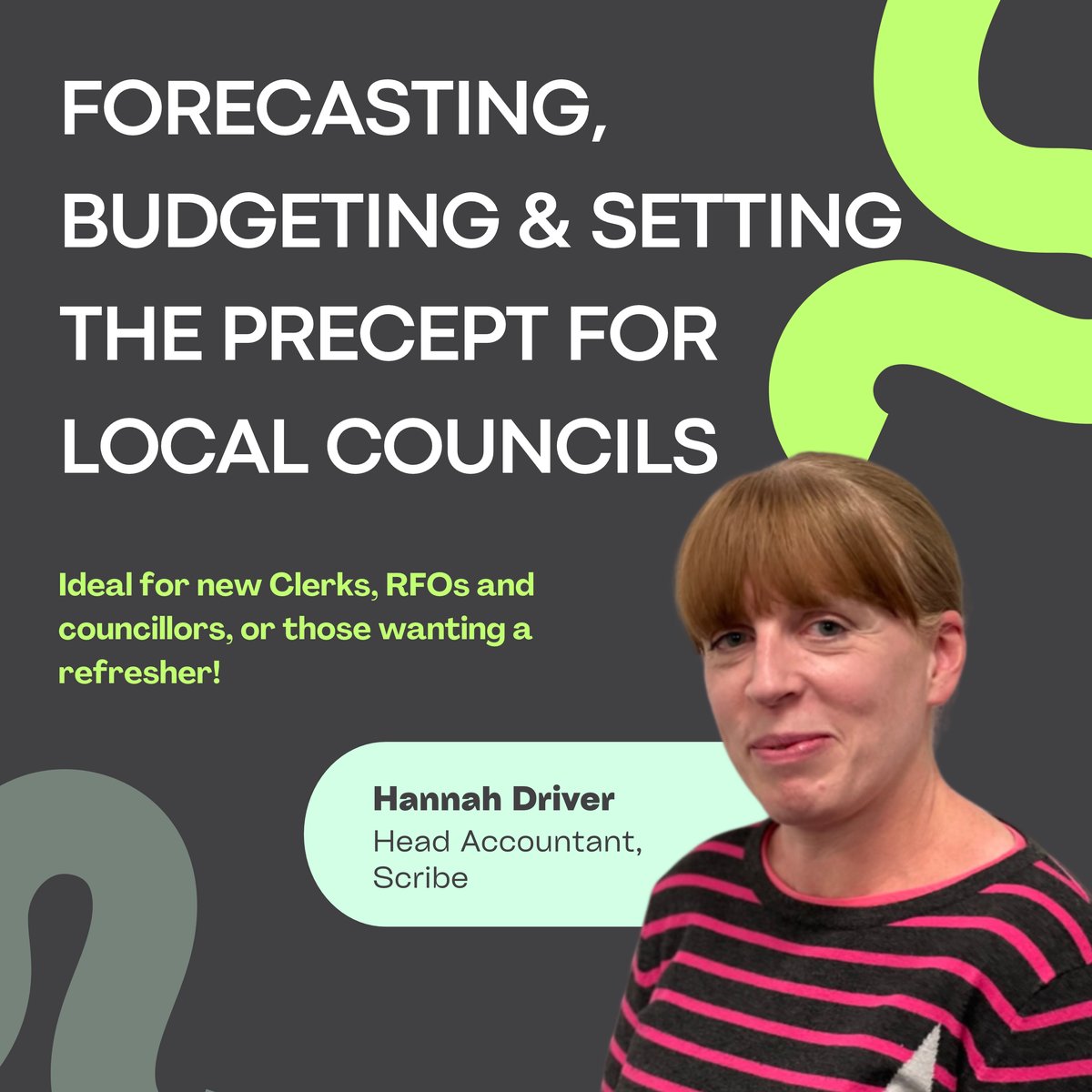
It's that time of year again. Budgets need drafting, committees need consulting, and the precept request has to reach the district council before its deadline. Hannah Driver thinks this is the hardest part of the clerk's year: at year end the figures are what they are, but a budget asks you to think about what is coming and make judgements about it. In this episode she takes the whole process back to basics, from forecasting where this year will land, through building next year's budget line by line, to calculating the precept and keeping an eye on it all once it is set.
Hannah is Head Accountant at Scribe, where she has spent over eight years working with hundreds of parish and town councils on their finances. She was last on the podcast in Episode 11, covering accounting basics. This session is pitched at new clerks, RFOs and councillors, and at anyone who would like a refresher before precept-setting season.
What Hannah covers:
- Why the budget matters. Every council, whatever its size, has a statutory duty to prepare and approve a budget before setting the precept and before the financial year starts. Every councillor should understand it, not line by line, but enough to know that a healthy bank balance is not the same as money that is free to spend.
- Working back from the deadline. Find out when your district needs the precept request (often January, sometimes December), then plan back: a draft budget in October, committee input in November, full council in December.
- Incremental or zero-based? If your budget structure works, build on it, but review each line rather than adding a blanket percentage. If it no longer reflects what the council does, start from a blank sheet. Zero-based budgeting is also the right tool for one-off projects.
- Forecasting. Take your actuals to date, predict the remaining months line by line, and compare the expected year-end position against the budget. Be realistic, and keep the forecast updated through the year.
- Building the budget. Start with expenditure: fixed costs with an inflationary uplift, then the harder-to-predict reactive costs. Work in net figures, because VAT you will reclaim is not a real cost and should not sit in your income budget either.
- Reserves. A general reserve of between three and twelve months' net revenue expenditure, earmarked reserves to smooth out regular big costs such as elections and asset renewals, and project reserves for one-off plans. Why freezing the precept year after year can store up a much bigger rise later.
- Calculating and checking the precept. Expenditure, less other income, adjusted for reserves. Then check the figure per Band D equivalent property and per household per week, and what to do if it comes out very different from last year.
- Monitoring and looking ahead. A cash book coded to your budget lines, budget-versus-actual reports through the year, good notes on how each figure was reached, and a three-to-five-year projection to show the council where costs and precept are heading.
John and Hannah also talk about Scribe's new budget worksheet, which takes your Scribe data into a spreadsheet for trying out different scenarios and then imports the agreed budget back in for next year.
Chapters
Questions answered in this episode
Drawn from our conversation with Hannah Driver, Head Accountant at Scribe, and from the questions raised during the live session. The answers below are editorial summaries, not verbatim transcripts.
When does a parish council have to set its budget?
Every parish and town council, whatever its size, has a statutory duty to prepare and approve a budget before it sets its precept and before the new financial year begins. The practical deadline is the district authority's date for receiving precept requests, often January and sometimes December. Working back from that, a draft in October, committee input in November and a full council decision in December is a common timetable.
What is the difference between incremental and zero-based budgeting?
Incremental budgeting uses the current year's budget as the starting point and adjusts each line, which works well when the structure and values are sound. Zero-based budgeting starts from a blank sheet and rebuilds every element, which takes longer but is the right choice when the existing budget no longer reflects what the council does. Many councils use a mix, and zero-based budgeting is also useful for one-off projects.
How do you forecast a council's year-end position?
Take the actual income and expenditure to date, then predict the remaining months for each budget line to arrive at an expected year-end figure. Comparing that against the budget shows the likely variances, which feed into next year's budget. Forecasts should be realistic, include known one-off events, and ideally be updated month by month through the year.
Should VAT be included in a council budget?
No. Budgets should be set on net figures, because VAT that will be reclaimed is not a true cost to the council, and expected VAT reclaims should not appear in the income budget. Keeping VAT claims up to date still matters, because large unclaimed amounts affect cash flow and the general reserve.
How much should a council hold in its general reserve?
The usual guidance is between three and twelve months of net revenue expenditure. Smaller councils tend to sit nearer twelve months, because a single unexpected cost is a far bigger share of a small budget. Larger councils can sit nearer three months, because few one-off events would be large enough to need a full year's spending in reserve.
Is freezing the precept a good idea?
Not necessarily. If the precept stays flat while costs rise each year, the gap is usually filled from reserves until they run down, at which point the council faces a much larger and harder-to-explain increase. Modest, regular increases in line with rising costs are generally easier to manage and to justify.
How can reserves be used to avoid big swings in the budget?
Regular but irregular costs, such as elections or replacing play equipment every few years, can be smoothed by setting aside a fixed amount each year in an earmarked reserve. Putting away a fifth of a cost that falls every five years means the money is there when it is needed, without a sudden jump in the precept.
How is the precept calculated?
Start with the expenditure budget, deduct other expected income, and adjust for any planned contributions to or from reserves. The result is the precept requirement. It is worth checking it per Band D equivalent property and per household per week, both to spot errors and to explain to residents what any change actually means for them.
What should a council do if the precept comes out very different to last year?
First, check the calculations carefully, because double-counted or missing lines are a common cause. If the figure is right, look at whether planned spending could be deferred, whether a surplus in the general reserve could reduce the requirement, or whether the change is justified. A justified rise is easier to explain when it is broken down per household and linked to what it will deliver.
Should money already held in an earmarked reserve appear in next year's budget?
If the reserve already holds enough for the planned project, there is no impact on the budget. The money sits in the reserve until the spending happens, so it does not need to be budgeted again.
Is it good practice to move money between budget lines to cover an overspend?
It is generally more useful to leave overspends and underspends visible. Moving surpluses around to cover gaps hides the fact that a budget line was set at the wrong level, whereas seeing the variance helps the council correct it properly when setting the following year's budget.
Do a council's income and expenditure budgets have to balance?
No. If reserves are being used to fund part of the planned spending, expenditure will exceed income by that amount, and that is fine as long as the reserve use is planned and understood.