
Navigating VAT on New Community Assets (and a 100km Ultramarathon)
Meet the guest
Watch
Get the Video and Slides
Show notes
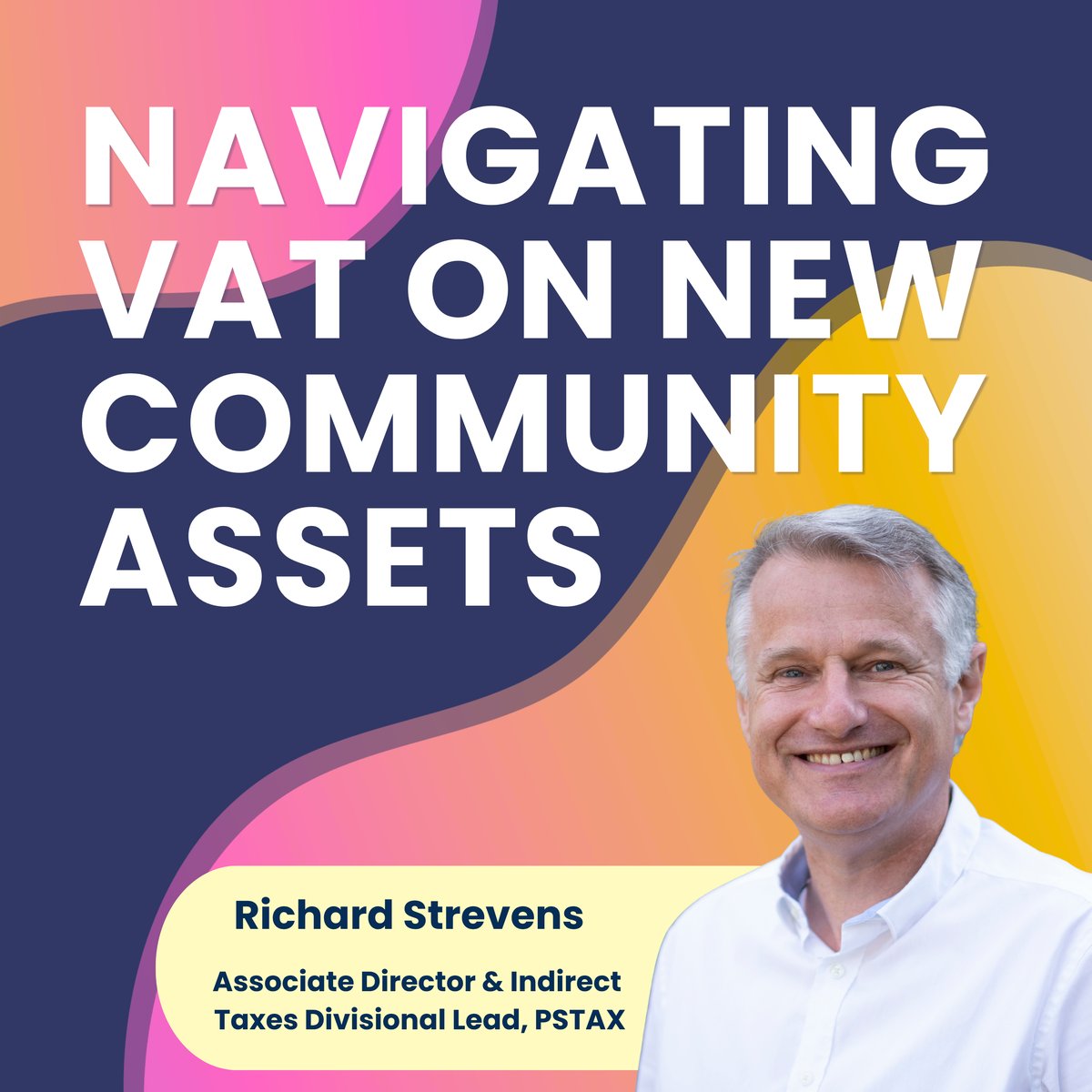
Whether your council is building a new community centre, refurbishing a building it has just taken on, or has been handed an asset and now has to spend money on it, the first question should be: can we claim back the VAT? Richard Strevens, Associate Director and Indirect Taxes Divisional Lead at PSTAX and author of the Town and Parish Councils VAT Guide, explains how councils recover VAT, what can stop them, and why the single biggest lesson is to ask about VAT early.
Richard has worked for or with local authorities for over 40 years. He started as a clerical assistant in the accountancy section at East Hertfordshire District Council straight after his A-levels, and has specialised in VAT for around 30 years.
What Richard covers:
- When VAT applies. The five conditions, and when a council acting under a special legal regime is outside the scope of VAT.
- Non-business, exempt and taxable. How each type of activity is treated, and what changes when a council registers for VAT rather than using the VAT126 form.
- Four boxes to claim VAT back. Place the order, receive the goods or services, hold a VAT invoice addressed to the council, and pay from your own funds. Then keep the records for six years.
- Partial exemption. The £7,500 or 5% limit, the seven-year average, and why breaching it means repaying the whole amount, not just the excess.
- A worked example. A £1 million community centre leased at a peppercorn rent, and what happens when the lease asks for legal or insurance costs, the budget grows to £1.5 million, sponsors and grants come in, or the council decides to run the centre itself.
- The option to tax. How it can protect £200,000 of VAT recovery, and why the council's own position comes first.
- Weddings and packages. Why catering, staffing or a wedding licence can turn exempt room hire into a taxable supply.
For help with a project, email helpline@pstax.co.uk. SLCC members can also use the SLCC advice line, which passes VAT questions to PSTAX.
In the chat with John, Richard tells us about walking and running the 100km London to Brighton ultramarathon in 19 hours, the stranger who gave him a fleece blanket at the finish, and why he'd tell his 18-year-old self not to be scared of stepping out of his comfort zone.
Chapters
Questions answered in this episode
Drawn from our conversation with Richard Strevens, Associate Director at PSTAX, and from the questions raised during the live session. The answers below are editorial summaries, not verbatim transcripts.
Can a parish or town council claim back VAT?
Generally yes. Councils can recover VAT on costs linked to their non-business activities without limit, whether they are VAT registered or use the VAT126 form. VAT on costs linked to exempt activities is recoverable only within the partial exemption limit, and VAT on taxable activities can only be recovered by a registered council.
What does a council need to do to recover VAT on a purchase?
It must place the order, receive the goods or services, hold a valid VAT invoice addressed to the council and pay from its own funds. Records should be kept for at least six years plus the current year, because HMRC may ask for evidence later.
What is the partial exemption limit for local councils?
VAT on costs linked to exempt activities can be kept if it is below £7,500 or 5% of the council's total VAT recovered in the year, whichever is higher. A seven-year average can help with a one-off breach. If the limit is breached, all of the exempt VAT becomes repayable, not just the amount over the limit.
Can a council recover VAT on building a community centre it leases at a peppercorn rent?
Yes, if the peppercorn really is the only consideration: no premium, service charges, cost recharges, future rent review or free use of rooms. Granting the lease is then a non-business activity. Any other payment makes it an exempt supply of land, which can push the council over the partial exemption limit.
When should a council consider opting to tax a building?
When exempt lettings or leases would put a large amount of construction VAT at risk under partial exemption. Opting to tax makes the supplies taxable, so the council charges VAT on rent and recharges but can recover the VAT on its costs. The council's own recovery position should usually come first.
Is sponsorship of a council building subject to VAT?
If a business gets publicity, advertising or naming rights in return for its money, the council is making a taxable supply. Agreeing the contribution as a price plus VAT avoids the VAT coming out of the money given.
Is room hire in a community centre exempt from VAT?
Basic room hire is usually exempt unless the council has opted to tax the building. If the council adds services such as catering or staff to host an event, the room can stop being the main thing and the whole package becomes taxable. Lettings for licensed wedding venues are generally treated as taxable too.
Do councils charge VAT on hiring out sports pitches?
Since a successful challenge by Chelmsford City Council, HMRC accepts that local authorities provide sports facilities under a special legal regime, so hire of facilities such as pitches with goalposts or courts with nets is outside the scope of VAT. That also means the related VAT on maintenance and capital costs is recoverable without limit. Hire of open recreation ground that isn't a sports facility is treated as land.
Can a council claim VAT on a receipt in an employee's name?
Yes, as long as the council can show it received the goods or services, for example an employee on council business buying equipment that becomes council property. An invoice in the council's name is better evidence where it can be obtained.
Can a council give a grant as goods instead of money and recover the VAT?
If the council awards the grant as goods or services up to a value, rather than as money, it can buy them, recover the VAT and give them away as a non-business activity. Once a cash grant has been awarded, the money belongs to the recipient even if it is still in the council's bank account.